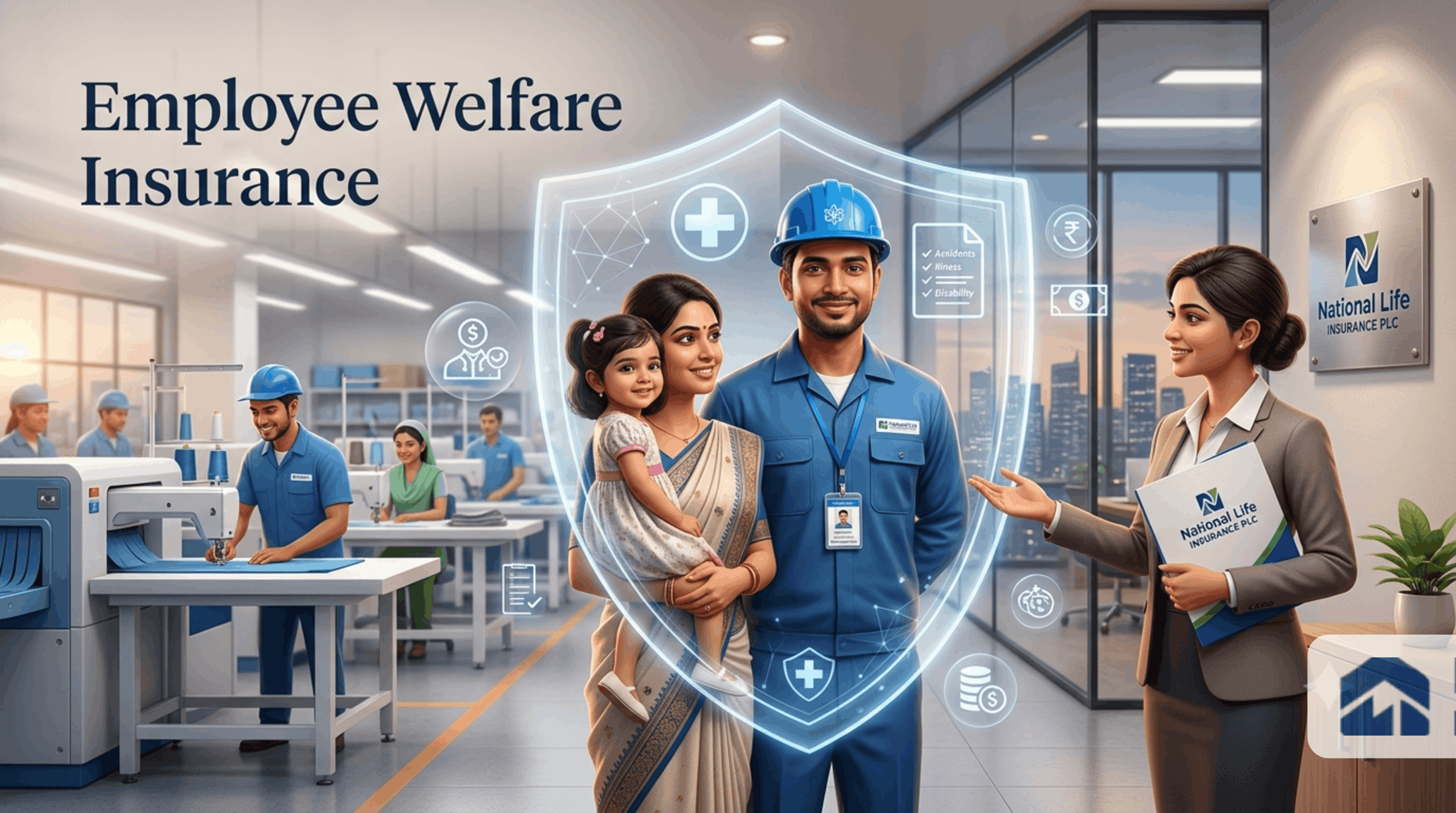
Employee Welfare Insurance: Benefits, Coverage & Why It Matters in 2026
Imagine a garment factory employee in Dhaka who has worked diligently for years. One day, an unexpected road accident leaves him unable to work for several months. His family suddenly faces medical expenses, household bills, and uncertainty about the future.
Now imagine that his employer has an employee welfare insurance plan. Instead of worrying about how to pay hospital bills or support his family, the employee receives financial assistance through the insurance policy. His employer also demonstrates genuine care for employee well-being, strengthening trust across the workplace.
Situations like this happen every day in Bangladesh. Unexpected illness, accidents, or even the loss of a family breadwinner can create financial hardship for employees and employers alike.
Employee Welfare Insurance (কর্মচারী কল্যাণ বীমা) helps reduce these risks by providing financial protection for employees and their families. It also supports businesses by improving employee satisfaction, reducing turnover, and creating a healthier work environment.
In 2026, organizations across Bangladesh are increasingly recognizing that investing in employee welfare is also an investment in business stability and long-term growth.
Employee Welfare Insurance (কর্মচারী কল্যাণ বীমা) is a group insurance plan provided by an employer to protect employees against financial risks such as death, illness, accidents, disability, or hospitalization. It helps employees and their families receive financial support during difficult times while enabling businesses to improve employee welfare, retention, and workplace productivity.
𝐖𝐡𝐚𝐭 𝐈𝐬 𝐄𝐦𝐩𝐥𝐨𝐲𝐞𝐞 𝐖𝐞𝐥𝐟𝐚𝐫𝐞 𝐈𝐧𝐬𝐮𝐫𝐚𝐧𝐜𝐞?
Employee Welfare Insurance (কর্মচারী কল্যাণ বীমা) is a type of group insurance that employers provide to protect employees against unexpected financial losses. Instead of purchasing separate policies for every individual, the employer arranges a single insurance plan that covers eligible employees under one policy.
These plans may include life insurance, accident insurance, health-related benefits, disability coverage, or other workplace welfare benefits depending on the selected policy.
The main purpose is simple: to provide financial assistance when employees or their families face unexpected challenges.
Unlike an individual insurance policy, employee welfare insurance is designed specifically for workplaces. Coverage is generally based on company policy, employee eligibility, and the chosen insurance plan.
For many employees, this benefit offers peace of mind because they know they have a financial safety net while working for the organization.
𝐔𝐧𝐝𝐞𝐫𝐬𝐭𝐚𝐧𝐝𝐢𝐧𝐠 𝐄𝐦𝐩𝐥𝐨𝐲𝐞𝐞 𝐖𝐞𝐥𝐟𝐚𝐫𝐞 𝐈𝐧𝐬𝐮𝐫𝐚𝐧𝐜𝐞 𝐢𝐧 𝐒𝐢𝐦𝐩𝐥𝐞 𝐓𝐞𝐫𝐦𝐬
Think of employee welfare insurance as a safety net created by an employer.
If an insured employee experiences an accident, serious illness, permanent disability, or passes away while covered under the policy, the insurance provides financial benefits according to the policy terms.
This support can help cover:
🔸Family living expenses
🔸Medical costs
🔸Hospital bills
🔸Funeral expenses
🔸Income replacement in certain situations
🔸Other approved insurance benefits
The exact coverage depends on the selected insurance plan and policy conditions.
𝐖𝐡𝐲 𝐃𝐨 𝐂𝐨𝐦𝐩𝐚𝐧𝐢𝐞𝐬 𝐎𝐟𝐟𝐞𝐫 𝐄𝐦𝐩𝐥𝐨𝐲𝐞𝐞 𝐖𝐞𝐥𝐟𝐚𝐫𝐞 𝐈𝐧𝐬𝐮𝐫𝐚𝐧𝐜𝐞?
Organizations invest in employee welfare insurance because employees are their most valuable asset.
Providing insurance demonstrates that the company values its workforce beyond salaries alone.
Businesses commonly introduce employee welfare insurance to:
🔸Protect employees from financial hardship
🔸Improve employee satisfaction
🔸Build long-term loyalty
🔸Attract skilled professionals
🔸Reduce staff turnover
🔸Support workplace well-being
🔸Strengthen the company's reputation
Employees are more likely to stay with employers who invest in their long-term welfare.
𝐄𝐦𝐩𝐥𝐨𝐲𝐞𝐞 𝐖𝐞𝐥𝐟𝐚𝐫𝐞 𝐈𝐧𝐬𝐮𝐫𝐚𝐧𝐜𝐞 𝐚𝐧𝐝 𝐄𝐦𝐩𝐥𝐨𝐲𝐞𝐞 𝐁𝐞𝐧𝐞𝐟𝐢𝐭𝐬
Salary is only one part of employee compensation.
Many organizations now offer additional employee benefits such as:
🔸Paid leave
🔸Provident fund
🔸Gratuity
🔸Medical allowances
🔸Group life insurance
🔸Accident insurance
🔸Health coverage
🔸Employee welfare insurance
Together, these benefits create a more secure and supportive work environment.
𝐖𝐡𝐲 𝐄𝐦𝐩𝐥𝐨𝐲𝐞𝐞 𝐖𝐞𝐥𝐟𝐚𝐫𝐞 𝐈𝐧𝐬𝐮𝐫𝐚𝐧𝐜𝐞 𝐌𝐚𝐭𝐭𝐞𝐫𝐬
Employee welfare insurance benefits more than just employees. It creates value for employers, families, organizations, and even the broader economy.
Benefits for Employees
Employees gain financial confidence when they know they are protected against unexpected events.
Some of the key advantages include:
🔸Financial security during emergencies
🔸Reduced stress about unexpected expenses
🔸Better access to insurance protection
🔸Peace of mind for employees and their families
🔸Greater confidence at work
🔸Increased job satisfaction
When employees feel protected, they can focus more on their work and less on financial worries.
𝐁𝐞𝐧𝐞𝐟𝐢𝐭𝐬 𝐟𝐨𝐫 𝐄𝐦𝐩𝐥𝐨𝐲𝐞𝐫𝐬
Employers also receive significant long-term value from offering employee welfare insurance.
Key benefits include:
🔸Higher employee retention
🔸Improved workplace morale
🔸Better employer reputation
🔸Easier recruitment of skilled workers
🔸Stronger employee engagement
🔸Lower recruitment and training costs due to reduced turnover
Insurance benefits also demonstrate corporate responsibility and commitment to employee well-being.
𝐁𝐞𝐧𝐞𝐟𝐢𝐭𝐬 𝐟𝐨𝐫 𝐅𝐚𝐦𝐢𝐥𝐢𝐞𝐬
A financial emergency affects entire families—not just the employee.
Employee welfare insurance can provide much-needed support by helping families manage expenses during difficult times.
Depending on the policy, benefits may assist with:
🔸Household expenses
🔸Children's education
🔸Medical treatment
🔸Loan repayments
🔸Daily living costs
This financial stability can make a significant difference when a family's primary earner faces an unexpected event.
𝐁𝐞𝐧𝐞𝐟𝐢𝐭𝐬 𝐟𝐨𝐫 𝐎𝐫𝐠𝐚𝐧𝐢𝐳𝐚𝐭𝐢𝐨𝐧𝐬
Healthy, secure employees contribute to stronger organizations.
Businesses with comprehensive employee welfare programs often experience:
🔸Higher productivity
🔸Better teamwork
🔸Improved attendance
🔸Increased employee loyalty
🔸Stronger workplace culture
🔸Enhanced business continuity
Employees who feel valued are generally more motivated to contribute to organizational success.
𝐁𝐞𝐧𝐞𝐟𝐢𝐭𝐬 𝐟𝐨𝐫 𝐒𝐨𝐜𝐢𝐞𝐭𝐲
Employee welfare insurance also contributes to broader economic and social well-being.
When workers have financial protection:
🔸Families are less vulnerable to sudden financial shocks.
🔸Dependence on emergency financial assistance may decrease.
🔸Businesses become more resilient.
🔸Confidence in formal employment can increase.
🔸Overall workforce stability improves.
A protected workforce supports sustainable economic development.
𝐓𝐲𝐩𝐞𝐬 𝐨𝐟 𝐄𝐦𝐩𝐥𝐨𝐲𝐞𝐞 𝐖𝐞𝐥𝐟𝐚𝐫𝐞 𝐈𝐧𝐬𝐮𝐫𝐚𝐧𝐜𝐞
Different businesses have different needs. For this reason, employee welfare insurance is often offered as a combination of several types of coverage.
Below are some of the most common options available.
𝟏. 𝐆𝐫𝐨𝐮𝐩 𝐋𝐢𝐟𝐞 𝐈𝐧𝐬𝐮𝐫𝐚𝐧𝐜𝐞
Group Life Insurance provides financial support to an employee's nominated beneficiary if the employee passes away while covered under the policy.
This benefit helps families manage immediate financial obligations and maintain stability during a difficult period.
It is one of the most common components of employee welfare insurance.
🔸Typical Features
🔸Lump-sum benefit
🔸Affordable group premium
🔸Employer-sponsored coverage
🔸Financial support for beneficiaries
𝟐. 𝐆𝐫𝐨𝐮𝐩 𝐇𝐞𝐚𝐥𝐭𝐡 𝐈𝐧𝐬𝐮𝐫𝐚𝐧𝐜𝐞
Group Health Insurance helps cover eligible medical expenses arising from illness, hospitalization, or treatment, depending on the policy.
Coverage may include:
🔸Hospitalization
🔸Surgery
🔸Diagnostic tests
🔸Emergency treatment
🔸Specialist consultations
The exact benefits depend on the selected insurance plan.
𝟑. 𝐆𝐫𝐨𝐮𝐩 𝐏𝐞𝐫𝐬𝐨𝐧𝐚𝐥 𝐀𝐜𝐜𝐢𝐝𝐞𝐧𝐭 𝐈𝐧𝐬𝐮𝐫𝐚𝐧𝐜𝐞
Accidents can happen anywhere—during work, commuting, or daily activities.
Group Personal Accident Insurance provides financial assistance if an insured employee suffers accidental injury, disability, or accidental death, subject to policy terms.
Possible benefits may include:
🔸Accidental death benefit
🔸Permanent disability benefit
🔸Partial disability benefit
🔸Medical expense reimbursement (where applicable)
𝟒. 𝐃𝐢𝐬𝐚𝐛𝐢𝐥𝐢𝐭𝐲 𝐈𝐧𝐬𝐮𝐫𝐚𝐧𝐜𝐞
A serious disability can affect an employee's ability to earn an income.
Disability Insurance helps provide financial support when an insured employee becomes partially or totally disabled due to a covered event.
Depending on the policy, benefits may be paid as a lump sum or in another approved form.
𝟓. 𝐂𝐫𝐢𝐭𝐢𝐜𝐚𝐥 𝐈𝐥𝐥𝐧𝐞𝐬𝐬 𝐂𝐨𝐯𝐞𝐫
Critical illnesses often require expensive treatment and long recovery periods.
Critical Illness Cover may provide a financial benefit if an insured employee is diagnosed with a covered serious illness listed in the policy.
Common examples may include:
🔸Certain cancers
🔸Heart attack
🔸Stroke
🔸Kidney failure
🔸Major organ transplant
Coverage varies by insurer and policy wording.
𝟔. 𝐇𝐨𝐬𝐩𝐢𝐭𝐚𝐥 𝐂𝐚𝐬𝐡 𝐁𝐞𝐧𝐞𝐟𝐢𝐭𝐬
Hospital Cash Benefits provide a fixed daily payment when an insured employee is hospitalized for a covered condition.
Unlike reimbursement-based coverage, this benefit gives employees flexibility to use the money for:
🔸Transportation
🔸Food
🔸Family support
🔸Additional medical costs
🔸Other related expenses
𝟕. 𝐌𝐚𝐭𝐞𝐫𝐧𝐢𝐭𝐲 𝐁𝐞𝐧𝐞𝐟𝐢𝐭𝐬
Some employee welfare plans include maternity-related benefits to support employees during pregnancy and childbirth.
Depending on the policy, these benefits may help with:
🔸Delivery expenses
🔸Hospitalization
🔸Prenatal care
🔸Postnatal care
Waiting periods and eligibility conditions often apply.
𝟖. 𝐎𝐭𝐡𝐞𝐫 𝐖𝐨𝐫𝐤𝐩𝐥𝐚𝐜𝐞 𝐖𝐞𝐥𝐟𝐚𝐫𝐞 𝐏𝐥𝐚𝐧𝐬
Depending on organizational needs and available products, employers may also choose additional employee welfare solutions such as:
🔸Funeral assistance
🔸Education support benefits
🔸Family protection options
🔸Supplemental insurance riders
🔸Customized group insurance packages
Organizations should discuss available options with their insurer to select a plan that aligns with their workforce needs.
𝐁𝐞𝐧𝐞𝐟𝐢𝐭𝐬 𝐨𝐟 𝐄𝐦𝐩𝐥𝐨𝐲𝐞𝐞 𝐖𝐞𝐥𝐟𝐚𝐫𝐞 𝐈𝐧𝐬𝐮𝐫𝐚𝐧𝐜𝐞
A well-designed employee welfare insurance plan creates value for employees, employers, and businesses alike. Beyond financial protection, it builds trust, improves workplace culture, and supports long-term organizational success.
Benefits for Employees
Employees are at the heart of every organization, and protecting their well-being helps create a more confident and productive workforce.
Key benefits include:
🔸Financial support during unexpected life events
🔸Greater peace of mind
🔸Reduced financial stress
🔸Access to workplace insurance at affordable group rates
🔸Enhanced job satisfaction
🔸Increased sense of security for employees and their families
When employees know they are protected, they are often better able to focus on their work and personal goals.
𝐁𝐞𝐧𝐞𝐟𝐢𝐭𝐬 𝐟𝐨𝐫 𝐄𝐦𝐩𝐥𝐨𝐲𝐞𝐫𝐬
Employee welfare insurance is also a valuable investment for employers.
𝐈𝐭 𝐜𝐚𝐧 𝐡𝐞𝐥𝐩 𝐨𝐫𝐠𝐚𝐧𝐢𝐳𝐚𝐭𝐢𝐨𝐧𝐬:
🔸Attract qualified professionals
🔸Improve employee retention
🔸Strengthen workplace morale
🔸Demonstrate commitment to employee well-being
🔸Build a positive employer brand
🔸Reduce the long-term costs associated with high staff turnover
Providing meaningful employee benefits can also strengthen relationships between management and employees.
𝐒𝐮𝐩𝐩𝐨𝐫𝐭𝐢𝐧𝐠 𝐁𝐮𝐬𝐢𝐧𝐞𝐬𝐬 𝐆𝐫𝐨𝐰𝐭𝐡
Businesses grow more effectively when employees feel secure and motivated.
Employee welfare insurance supports growth by:
🔸Improving workforce stability
🔸Reducing disruptions caused by employee turnover
🔸Encouraging long-term commitment
🔸Enhancing organizational resilience
🔸Supporting sustainable business planning
A stable workforce enables businesses to focus on innovation, customer service, and expansion rather than constant recruitment.
𝐈𝐦𝐩𝐫𝐨𝐯𝐢𝐧𝐠 𝐓𝐚𝐥𝐞𝐧𝐭 𝐑𝐞𝐭𝐞𝐧𝐭𝐢𝐨𝐧
Retaining experienced employees is often more cost-effective than hiring and training new staff.
A comprehensive employee welfare insurance program signals that the organization values its people, making it more attractive to current and prospective employees.
This can lead to:
🔸Higher employee loyalty
🔸Better retention of skilled professionals
🔸Stronger organizational knowledge
🔸Reduced recruitment expenses
Boosting Productivity
Employees who are less worried about financial uncertainty can devote more attention to their responsibilities.
𝐈𝐧𝐬𝐮𝐫𝐚𝐧𝐜𝐞 𝐛𝐞𝐧𝐞𝐟𝐢𝐭𝐬 𝐜𝐨𝐧𝐭𝐫𝐢𝐛𝐮𝐭𝐞 𝐭𝐨:
🔸Better concentration at work
🔸Higher motivation
🔸Improved attendance
🔸Increased engagement
🔸Stronger teamwork
A supportive work environment often results in better overall performance.
𝐒𝐮𝐩𝐩𝐨𝐫𝐭𝐢𝐧𝐠 𝐌𝐞𝐧𝐭𝐚𝐥 𝐖𝐞𝐥𝐥-𝐛𝐞𝐢𝐧𝐠
Financial uncertainty can affect emotional health and workplace performance.
Employee welfare insurance helps ease some of these concerns by providing a level of financial protection against unexpected events.
When employees know support is available, they may experience:
🔸Reduced anxiety
🔸Greater confidence
🔸Improved work-life balance
🔸Stronger trust in their employer
A workplace that values employee well-being is more likely to foster a positive and collaborative culture.
𝐒𝐭𝐫𝐞𝐧𝐠𝐭𝐡𝐞𝐧𝐢𝐧𝐠 𝐅𝐢𝐧𝐚𝐧𝐜𝐢𝐚𝐥 𝐒𝐞𝐜𝐮𝐫𝐢𝐭𝐲
Perhaps the greatest benefit of employee welfare insurance is the financial protection it offers.
Whether dealing with an accident, illness, disability, or the loss of an employee, insurance benefits can help reduce the financial impact on individuals and their families.
This protection allows employees to focus on recovery and rebuilding rather than facing immediate financial hardship alone.
𝐂𝐨𝐯𝐞𝐫𝐚𝐠𝐞 𝐨𝐟 𝐄𝐦𝐩𝐥𝐨𝐲𝐞𝐞 𝐖𝐞𝐥𝐟𝐚𝐫𝐞 𝐈𝐧𝐬𝐮𝐫𝐚𝐧𝐜𝐞
Understanding what an employee welfare insurance policy covers is essential before choosing a plan. While coverage varies by insurer and policy, employers should carefully review the policy schedule, exclusions, waiting periods, and benefit limits to ensure the plan meets the needs of their workforce.
𝐖𝐡𝐚𝐭 𝐈𝐬 𝐓𝐲𝐩𝐢𝐜𝐚𝐥𝐥𝐲 𝐂𝐨𝐯𝐞𝐫𝐞𝐝?
Employee welfare insurance often combines several benefits into one group policy. Depending on the selected plan, coverage may include:
🔸Natural death benefit
🔸Accidental death benefit
🔸Permanent total disability
🔸Permanent partial disability
🔸Temporary disability (if included)
🔸Hospitalization expenses
🔸Surgical expenses (where applicable)
🔸Critical illness benefits
🔸Hospital cash allowance
🔸Maternity benefits (if selected)
🔸Funeral assistance (where available)
🔸Employee assistance benefits included in the policy
Some employers may also choose optional riders that provide additional protection based on their workforce requirements.
𝐖𝐡𝐚𝐭 𝐈𝐬 𝐔𝐬𝐮𝐚𝐥𝐥𝐲 𝐍𝐨𝐭 𝐂𝐨𝐯𝐞𝐫𝐞𝐝?
Like every insurance policy, employee welfare insurance has exclusions. Common exclusions may include:
🔸Fraudulent claims
🔸Intentional self-inflicted injuries
🔸Claims arising from criminal activities
🔸Events specifically excluded under the policy
🔸Pre-existing conditions, where stated
🔸Benefits outside the policy period
🔸Claims exceeding the policy limits
Each policy has its own terms and conditions. Employers and employees should read the policy document carefully to understand the exact scope of coverage.
𝐖𝐚𝐢𝐭𝐢𝐧𝐠 𝐏𝐞𝐫𝐢𝐨𝐝𝐬
Some benefits do not begin immediately after the policy starts.
For example, certain health-related or maternity benefits may have waiting periods before claims become eligible.
Waiting periods help ensure the policy operates fairly for all insured members.
Claim Limits
Every insurance plan has defined benefit limits.
These limits may include:
🔸Maximum life insurance benefit
🔸Annual medical coverage limit
🔸Daily hospital cash limit
🔸Maximum disability benefit
🔸Critical illness benefit limit
The limits depend on the plan selected by the employer.
𝐏𝐨𝐥𝐢𝐜𝐲 𝐂𝐨𝐧𝐝𝐢𝐭𝐢𝐨𝐧𝐬
To remain eligible for benefits, employees generally need to:
🔸Meet the employer's eligibility criteria.
🔸Be included in the group policy.
🔸Keep employment status active where required.
🔸Submit claims within the required timeframe.
🔸Provide supporting documents requested by the insurer.
Understanding these conditions helps avoid delays during the claims process.
𝐄𝐥𝐢𝐠𝐢𝐛𝐢𝐥𝐢𝐭𝐲 𝐟𝐨𝐫 𝐄𝐦𝐩𝐥𝐨𝐲𝐞𝐞 𝐖𝐞𝐥𝐟𝐚𝐫𝐞 𝐈𝐧𝐬𝐮𝐫𝐚𝐧𝐜𝐞
Not every individual can join a group employee welfare insurance plan. Eligibility depends on both the employer's policy and the insurer's underwriting guidelines.
Who Can Join?
Employee welfare insurance is generally available to:
🔸Permanent employees
🔸Full-time employees
🔸Eligible contractual employees (if included)
🔸Company executives
🔸Managers
🔸Office staff
🔸Factory workers
🔸Field employees
The employer determines which employee categories are covered.
Age Limits
The minimum and maximum entry ages depend on the selected insurance plan.
Many group insurance policies also specify a maximum coverage age or retirement age.
Employers should verify these limits before enrolling employees.
Company Requirements
To purchase employee welfare insurance, businesses may need to meet certain requirements, such as:
🔸Minimum number of employees
🔸Registered business status
🔸Employee records
🔸Required documentation during policy issuance
The exact requirements vary according to the insurance product.
𝐂𝐚𝐧 𝐅𝐚𝐦𝐢𝐥𝐲 𝐌𝐞𝐦𝐛𝐞𝐫𝐬 𝐁𝐞 𝐂𝐨𝐯𝐞𝐫𝐞𝐝?
Some employee welfare insurance plans allow employers to extend certain benefits to eligible dependents.
Depending on the policy, eligible dependents may include:
🔸Spouse
🔸Children
🔸Parents (if available under the plan)
Coverage for dependents may require additional premiums or specific policy options.
𝐇𝐨𝐰 𝐄𝐦𝐩𝐥𝐨𝐲𝐞𝐞 𝐖𝐞𝐥𝐟𝐚𝐫𝐞 𝐈𝐧𝐬𝐮𝐫𝐚𝐧𝐜𝐞 𝐏𝐫𝐞𝐦𝐢𝐮𝐦𝐬 𝐀𝐫𝐞 𝐂𝐚𝐥𝐜𝐮𝐥𝐚𝐭𝐞𝐝
One of the most common questions employers ask is how insurance premiums are determined.
There is no single price for every company. Premiums are calculated based on several factors.
𝐅𝐚𝐜𝐭𝐨𝐫𝐬 𝐓𝐡𝐚𝐭 𝐀𝐟𝐟𝐞𝐜𝐭 𝐏𝐫𝐞𝐦𝐢𝐮𝐦𝐬
Insurance providers typically consider:
🔸Number of employees
🔸Average employee age
🔸Type of business
🔸Occupational risk
🔸Coverage amount
🔸Selected insurance benefits
🔸Claim history (where applicable)
🔸Optional riders
🔸Policy duration
Companies with higher workplace risks may have different premium rates than businesses operating in lower-risk industries.
𝐒𝐢𝐦𝐩𝐥𝐞 𝐏𝐫𝐞𝐦𝐢𝐮𝐦 𝐄𝐱𝐚𝐦𝐩𝐥𝐞
Imagine two companies.
Company A
🔸25 office employees
🔸Basic group life insurance
🔸Standard accident cover
The premium is likely to be lower because the workforce performs relatively low-risk office work.
Company B
🔸250 factory employees
🔸Group life insurance
🔸Accident cover
🔸Critical illness cover
🔸Hospital cash benefits
Because the workforce is larger and the coverage is more comprehensive, the total premium would generally be higher.
The actual premium depends on the insurer's assessment and the selected policy.
𝐈𝐬 𝐭𝐡𝐞 𝐏𝐫𝐞𝐦𝐢𝐮𝐦 𝐏𝐚𝐢𝐝 𝐛𝐲 𝐭𝐡𝐞 𝐄𝐦𝐩𝐥𝐨𝐲𝐞𝐫?
In many organizations, the employer pays the full premium as part of the employee benefits package.
Some companies may also introduce cost-sharing arrangements where employees contribute toward optional additional benefits.
The payment structure depends on company policy.
𝐄𝐦𝐩𝐥𝐨𝐲𝐞𝐞 𝐖𝐞𝐥𝐟𝐚𝐫𝐞 𝐈𝐧𝐬𝐮𝐫𝐚𝐧𝐜𝐞 𝐂𝐥𝐚𝐢𝐦𝐬 𝐏𝐫𝐨𝐜𝐞𝐬𝐬
A simple and transparent claims process helps employees receive benefits when they need them most.
Although requirements vary by policy, the process generally follows these steps.
𝐒𝐭𝐞𝐩 𝟏: 𝐍𝐨𝐭𝐢𝐟𝐲 𝐭𝐡𝐞 𝐄𝐦𝐩𝐥𝐨𝐲𝐞𝐫
The employee or nominee should inform the employer about the insured event as soon as reasonably possible.
Prompt notification helps initiate the claim without unnecessary delays.
𝐒𝐭𝐞𝐩 𝟐: 𝐈𝐧𝐟𝐨𝐫𝐦 𝐭𝐡𝐞 𝐈𝐧𝐬𝐮𝐫𝐚𝐧𝐜𝐞 𝐂𝐨𝐦𝐩𝐚𝐧𝐲
The employer or authorized representative submits the claim notification to the insurance provider.
The insurer will explain the documents required.
𝐒𝐭𝐞𝐩 𝟑: 𝐂𝐨𝐦𝐩𝐥𝐞𝐭𝐞 𝐭𝐡𝐞 𝐂𝐥𝐚𝐢𝐦 𝐅𝐨𝐫𝐦
The claimant completes the required claim form and provides accurate information.
Incomplete forms may delay processing.
𝐒𝐭𝐞𝐩 𝟒: 𝐒𝐮𝐛𝐦𝐢𝐭 𝐒𝐮𝐩𝐩𝐨𝐫𝐭𝐢𝐧𝐠 𝐃𝐨𝐜𝐮𝐦𝐞𝐧𝐭𝐬
Depending on the claim type, documents may include:
🔸Claim form
🔸Medical reports
🔸Hospital discharge summary
🔸Death certificate (where applicable)
🔸Police report for accidental events (if required)
🔸National ID or other identification
🔸Employer certification
🔸Nominee information
The insurer may request additional documents where necessary.
𝐒𝐭𝐞𝐩 𝟓: 𝐂𝐥𝐚𝐢𝐦 𝐀𝐬𝐬𝐞𝐬𝐬𝐦𝐞𝐧𝐭
The insurance company reviews:
🔸Policy coverage
🔸Claim eligibility
🔸Submitted documents
🔸Policy conditions
If further information is required, the insurer contacts the employer or claimant.
𝐒𝐭𝐞𝐩 𝟔: 𝐂𝐥𝐚𝐢𝐦 𝐒𝐞𝐭𝐭𝐥𝐞𝐦𝐞𝐧𝐭
Once approved, the claim is settled according to the policy terms and conditions.
Settlement timelines vary depending on the complexity of the claim and the completeness of the documentation.
𝐑𝐞𝐚𝐥-𝐋𝐢𝐟𝐞 𝐖𝐨𝐫𝐤𝐩𝐥𝐚𝐜𝐞 𝐄𝐱𝐚𝐦𝐩𝐥𝐞
𝐇𝐨𝐰 𝐄𝐦𝐩𝐥𝐨𝐲𝐞𝐞 𝐖𝐞𝐥𝐟𝐚𝐫𝐞 𝐈𝐧𝐬𝐮𝐫𝐚𝐧𝐜𝐞 𝐇𝐞𝐥𝐩𝐞𝐝 𝐁𝐨𝐭𝐡 𝐚𝐧 𝐄𝐦𝐩𝐥𝐨𝐲𝐞𝐞 𝐚𝐧𝐝 𝐚𝐧 𝐄𝐦𝐩𝐥𝐨𝐲𝐞𝐫
Rahim works as a production supervisor at a manufacturing company in Gazipur. He has been with the company for six years and supports his wife, two children, and elderly parents.
One evening, while returning home from work, Rahim was involved in a serious road accident. He required emergency treatment and remained hospitalized for several days. Doctors advised him to take several weeks off work to recover.
Fortunately, Rahim's employer had enrolled all eligible employees in an employee welfare insurance plan.
Following the claims process, the policy provided benefits according to its terms. The financial support helped Rahim and his family manage immediate expenses while he focused on his recovery.
The employer also benefited. Employees appreciated that the company had planned ahead for unexpected situations. Trust in management increased, workplace morale remained strong, and staff recognized that employee well-being was a genuine priority.
This example illustrates how employee welfare insurance can create value for both employees and employers when unexpected events occur.
𝐂𝐨𝐦𝐦𝐨𝐧 𝐌𝐢𝐬𝐭𝐚𝐤𝐞𝐬 𝐄𝐦𝐩𝐥𝐨𝐲𝐞𝐫𝐬 𝐌𝐚𝐤𝐞
Choosing employee welfare insurance requires careful planning. Avoiding common mistakes can help employers provide meaningful protection while making the best use of their investment.
𝟏. 𝐂𝐡𝐨𝐨𝐬𝐢𝐧𝐠 𝐂𝐨𝐯𝐞𝐫𝐚𝐠𝐞 𝐁𝐚𝐬𝐞𝐝 𝐎𝐧𝐥𝐲 𝐨𝐧 𝐏𝐫𝐢𝐜𝐞
A low premium may also mean lower benefits or limited protection.
Instead of focusing only on cost, employers should evaluate the overall value of the coverage.
𝟐. 𝐈𝐠𝐧𝐨𝐫𝐢𝐧𝐠 𝐄𝐦𝐩𝐥𝐨𝐲𝐞𝐞 𝐍𝐞𝐞𝐝𝐬
Different workforces have different risks.
For example:
🔸Office employees may prioritize health benefits.
🔸Factory workers may need stronger accident protection.
🔸Sales teams may benefit from additional travel-related coverage.
Selecting benefits that match employee needs improves the value of the policy.
𝟑. 𝐍𝐨𝐭 𝐑𝐞𝐯𝐢𝐞𝐰𝐢𝐧𝐠 𝐂𝐨𝐯𝐞𝐫𝐚𝐠𝐞 𝐑𝐞𝐠𝐮𝐥𝐚𝐫𝐥𝐲
Businesses change over time.
Employee numbers, business activities, and workplace risks may all evolve.
Reviewing insurance annually helps ensure the policy remains appropriate.
𝟒. 𝐏𝐨𝐨𝐫 𝐂𝐨𝐦𝐦𝐮𝐧𝐢𝐜𝐚𝐭𝐢𝐨𝐧
Some employees are unaware that they are covered or do not understand the available benefits.
Employers should clearly explain:
🔸Coverage
🔸Claim procedures
🔸Nominee updates
🔸Policy limitations
Well-informed employees are more likely to use their benefits correctly.
𝟓. 𝐃𝐞𝐥𝐚𝐲𝐢𝐧𝐠 𝐂𝐥𝐚𝐢𝐦𝐬
Waiting too long to report an insured event can complicate the claims process.
Employers should encourage prompt reporting and maintain proper records.
𝐇𝐨𝐰 𝐭𝐨 𝐂𝐡𝐨𝐨𝐬𝐞 𝐭𝐡𝐞 𝐑𝐢𝐠𝐡𝐭 𝐄𝐦𝐩𝐥𝐨𝐲𝐞𝐞 𝐖𝐞𝐥𝐟𝐚𝐫𝐞 𝐈𝐧𝐬𝐮𝐫𝐚𝐧𝐜𝐞
Selecting the right plan requires balancing employee needs, business goals, and budget.
Use the following checklist when evaluating employee welfare insurance.
𝐄𝐦𝐩𝐥𝐨𝐲𝐞𝐫 𝐂𝐡𝐞𝐜𝐤𝐥𝐢𝐬𝐭
✔ Understand the needs of your workforce.
✔ Determine an appropriate insurance budget.
✔ Compare available coverage options.
✔ Review policy exclusions carefully.
✔ Check benefit limits.
✔ Understand waiting periods.
✔ Evaluate claim procedures.
✔ Consider optional riders if needed.
✔ Review customer service and claims support.
✔ Schedule regular policy reviews as your business grows.
A well-planned insurance program can support both employees and long-term business success.
𝐖𝐡𝐲 𝐂𝐡𝐨𝐨𝐬𝐞 𝐍𝐚𝐭𝐢𝐨𝐧𝐚𝐥 𝐋𝐢𝐟𝐞 𝐈𝐧𝐬𝐮𝐫𝐚𝐧𝐜𝐞 𝐏𝐋𝐂?
Employee welfare insurance is most effective when supported by an experienced and reliable insurance provider.
National Life Insurance PLC has built its reputation by offering life insurance solutions designed to support individuals, families, and organizations across Bangladesh.
Businesses looking for employee welfare insurance can benefit from:
🔸Experience serving customers across Bangladesh
🔸Professional guidance for employers and HR teams
🔸A wide branch network for customer convenience
🔸Employee-focused insurance solutions
🔸Responsive customer support throughout the policy journey
🔸Assistance with policy servicing and claims procedures
Every business has different workforce needs. Rather than choosing a one-size-fits-all solution, employers are encouraged to discuss their requirements with National Life Insurance PLC to identify a suitable employee welfare insurance plan.
For personalized guidance, visit your nearest National Life Insurance PLC branch and speak with an insurance representative who can explain available options, eligibility requirements, and policy features based on your organization's needs.
𝐊𝐞𝐲 𝐓𝐚𝐤𝐞𝐚𝐰𝐚𝐲𝐬 𝐀𝐛𝐨𝐮𝐭 𝐄𝐦𝐩𝐥𝐨𝐲𝐞𝐞 𝐖𝐞𝐥𝐟𝐚𝐫𝐞 𝐈𝐧𝐬𝐮𝐫𝐚𝐧𝐜𝐞
Employee welfare insurance is more than a workplace benefit. It is a structured approach to protecting employees, families, and organizations from unexpected financial challenges.
The most important points to remember are:
🔸Employee Welfare Insurance (কর্মচারী কল্যাণ বীমা) provides financial protection for employees through employer-sponsored group insurance plans.
🔸It can include benefits such as group life insurance, health protection, accident coverage, disability benefits, and critical illness support.
🔸Employers use employee welfare insurance to improve employee satisfaction, retention, and workplace stability.
🔸Employees gain financial confidence because they have support during emergencies.
🔸Families benefit from financial assistance during difficult situations.
🔸The right insurance plan depends on workforce needs, business type, budget, and coverage requirements.
🔸Employers should review policy terms, exclusions, waiting periods, and claim procedures before selecting a plan.
🔸Clear communication helps employees understand and use their benefits effectively.
🔸A reliable insurance provider can make policy management and claims support easier.
🔸Employee welfare insurance supports a stronger relationship between employers and employees.
A carefully selected plan creates value for everyone involved: employees, employers, families, and the wider business community.
Conclusion: Why Employee Welfare Insurance Matters in 2026
The workplace is changing, and employee expectations are changing with it. Today, employees look beyond salary when choosing where to work. They also value security, support, and benefits that protect their future.
Employee Welfare Insurance (কর্মচারী কল্যাণ বীমা) helps organizations meet these expectations by providing financial protection against unexpected events such as accidents, illness, disability, or loss of life.
For employees, it provides reassurance that they and their families have support during challenging times. For employers, it strengthens workforce loyalty, improves workplace culture, and supports long-term business success.
A strong employee welfare program shows that a company values its people. It creates trust between employers and employees and helps build a more secure working environment.
Businesses in Bangladesh can explore suitable employee welfare insurance options based on their workforce size, industry, and employee needs. With the right coverage, organizations can protect their most valuable resource—their people.
To understand available employee welfare insurance solutions and choose a plan that matches your organization's requirements, visit the nearest National Life Insurance PLC branch and speak with an experienced insurance representative.
𝐖𝐡𝐲 𝐄𝐦𝐩𝐥𝐨𝐲𝐞𝐞 𝐖𝐞𝐥𝐟𝐚𝐫𝐞 𝐈𝐧𝐬𝐮𝐫𝐚𝐧𝐜𝐞 𝐈𝐬 𝐁𝐞𝐜𝐨𝐦𝐢𝐧𝐠 𝐌𝐨𝐫𝐞 𝐈𝐦𝐩𝐨𝐫𝐭𝐚𝐧𝐭 𝐢𝐧 𝟐𝟎𝟐𝟔
Workplaces are changing rapidly. Employees today consider benefits beyond salary when choosing and staying with an organization.
In 2026, employee welfare insurance helps companies address:
Rising Healthcare Costs
Medical expenses continue to create financial pressure for families. Insurance support helps employees manage unexpected healthcare costs.
Employee Retention Challenges
Organizations offering meaningful benefits can create stronger employee loyalty and reduce workforce turnover.
Workplace Safety Concerns
Industries with physical risks, such as manufacturing and garments, can use accident protection benefits to support workers.
Employer Branding
Companies that invest in employee welfare are viewed as responsible employers.
𝐇𝐨𝐰 𝐄𝐦𝐩𝐥𝐨𝐲𝐞𝐞 𝐖𝐞𝐥𝐟𝐚𝐫𝐞 𝐈𝐧𝐬𝐮𝐫𝐚𝐧𝐜𝐞 𝐒𝐮𝐩𝐩𝐨𝐫𝐭𝐬 𝐇𝐑 𝐌𝐚𝐧𝐚𝐠𝐞𝐦𝐞𝐧𝐭
For HR teams, employee welfare insurance is more than an employee benefit. It is a strategic tool for managing people and workplace challenges.
HR departments can use welfare insurance programs to:
🔸Improve employee engagement
🔸Strengthen compensation packages
🔸Support recruitment efforts
🔸Increase employee satisfaction
🔸Reduce employee concerns during emergencies
🔸Create a positive workplace culture
A well-managed insurance benefit also makes HR communication easier because employees clearly understand the support available to them.
𝐈𝐧𝐝𝐮𝐬𝐭𝐫𝐢𝐞𝐬 𝐓𝐡𝐚𝐭 𝐂𝐨𝐦𝐦𝐨𝐧𝐥𝐲 𝐔𝐬𝐞 𝐄𝐦𝐩𝐥𝐨𝐲𝐞𝐞 𝐖𝐞𝐥𝐟𝐚𝐫𝐞 𝐈𝐧𝐬𝐮𝐫𝐚𝐧𝐜𝐞
Different industries have different employee protection needs.
Garments and Textile Industry
Large workforces and workplace risks make employee protection especially important.
Manufacturing Companies
Accident and disability protection can provide important financial support for industrial workers.
Banks and Financial Institutions
Employees often receive insurance benefits as part of competitive compensation packages.
Healthcare Organizations
Medical professionals and support staff benefit from structured protection programs.
Technology Companies
Insurance benefits help technology companies attract and retain skilled professionals.
Small and Medium Businesses
SMEs can use group insurance solutions to provide valuable benefits without managing individual policies.
𝐇𝐨𝐰 𝐁𝐮𝐬𝐢𝐧𝐞𝐬𝐬𝐞𝐬 𝐂𝐚𝐧 𝐆𝐞𝐭 𝐄𝐦𝐩𝐥𝐨𝐲𝐞𝐞 𝐖𝐞𝐥𝐟𝐚𝐫𝐞 𝐈𝐧𝐬𝐮𝐫𝐚𝐧𝐜𝐞 𝐅𝐫𝐨𝐦 𝐍𝐚𝐭𝐢𝐨𝐧𝐚𝐥 𝐋𝐢𝐟𝐞 𝐈𝐧𝐬𝐮𝐫𝐚𝐧𝐜𝐞 𝐏𝐋𝐂
Organizations interested in employee welfare insurance can generally follow these steps:
Step 1: Discuss Workforce Requirements
The company evaluates employee numbers, business type, and required benefits.
Step 2: Select Suitable Coverage
Businesses can choose appropriate protection options such as:
🔸Group life insurance
🔸Accident coverage
🔸Disability benefits
🔸Health-related benefits
🔸Additional welfare options
Step 3: Receive Policy Proposal
The insurer provides plan details based on organizational requirements.
Step 4: Complete Documentation
Required company and employee information is submitted for policy processing.
Step 5: Activate Employee Coverage
After approval and premium payment, eligible employees receive insurance protection according to policy terms.
𝐖𝐡𝐲 𝐁𝐮𝐬𝐢𝐧𝐞𝐬𝐬𝐞𝐬 𝐓𝐫𝐮𝐬𝐭 𝐍𝐚𝐭𝐢𝐨𝐧𝐚𝐥 𝐋𝐢𝐟𝐞 𝐈𝐧𝐬𝐮𝐫𝐚𝐧𝐜𝐞 𝐏𝐋𝐂 𝐟𝐨𝐫 𝐄𝐦𝐩𝐥𝐨𝐲𝐞𝐞 𝐖𝐞𝐥𝐟𝐚𝐫𝐞 𝐈𝐧𝐬𝐮𝐫𝐚𝐧𝐜𝐞
Choosing the right insurance provider is an important decision for organizations. National Life Insurance PLC focuses on providing insurance solutions designed around the needs of individuals, families, and businesses in Bangladesh.
Businesses can benefit from:
✔ Experience in Bangladesh’s insurance sector
✔ Employer-focused insurance solutions
✔ Support for corporate insurance requirements
✔ Guidance during policy selection
✔ Assistance throughout the insurance journey
✔ Customer-focused service approach
National Life Insurance PLC works with organizations to understand their workforce requirements and develop suitable insurance solutions based on business needs.
𝐄𝐦𝐩𝐥𝐨𝐲𝐞𝐞 𝐖𝐞𝐥𝐟𝐚𝐫𝐞 𝐈𝐧𝐬𝐮𝐫𝐚𝐧𝐜𝐞 𝐌𝐞𝐚𝐧𝐢𝐧𝐠
Employee Welfare Insurance is an employer-provided group insurance plan that protects employees and their families financially against risks such as death, accidents, hospitalization, disability, and critical illness. It helps businesses improve employee satisfaction, retention, and workplace security.
𝐅𝐫𝐞𝐪𝐮𝐞𝐧𝐭𝐥𝐲 𝐀𝐬𝐤𝐞𝐝 𝐐𝐮𝐞𝐬𝐭𝐢𝐨𝐧𝐬 (𝐅𝐀𝐐𝐬)
1. What is employee welfare insurance?
Employee Welfare Insurance (কর্মচারী কল্যাণ বীমা) is a group insurance program provided by an employer to protect employees against financial risks. It may cover events such as death, accidents, hospitalization, disability, or critical illness depending on the policy. The purpose is to provide financial support to employees and their families during unexpected situations.
2. Why is employee welfare insurance important for employees?
Employee welfare insurance gives employees financial protection when they face unexpected challenges. Medical emergencies, accidents, or loss of income can create serious financial pressure. Insurance benefits help reduce this burden and provide confidence that employees and their families have support during difficult periods.
3. Who should buy employee welfare insurance?
Employee welfare insurance is mainly designed for employers who want to protect their workforce. Businesses of all sizes, including small businesses, medium enterprises, and large corporations, can consider group insurance solutions. It is especially valuable for organizations that want to provide better employee benefits and create a supportive workplace environment.
4. Is employee welfare insurance mandatory in Bangladesh?
Employee welfare insurance requirements depend on applicable laws, regulations, and company policies. While not every organization may be legally required to provide every type of employee insurance, many employers choose to offer workplace insurance voluntarily as part of their employee benefits strategy and corporate responsibility.
5. What does employee welfare insurance cover?
Coverage depends on the selected insurance plan. Common benefits may include group life insurance, accidental death coverage, disability protection, hospitalization benefits, critical illness coverage, and other workplace welfare benefits. Employers should review policy terms carefully because coverage limits, exclusions, and conditions vary between plans.
6. How are employee welfare insurance premiums calculated?
Premiums are usually calculated based on factors such as the number of employees, employee age profile, industry risk, coverage amount, selected benefits, and policy duration. A company with more employees or broader coverage options may have a different premium structure compared to a smaller organization with basic protection.
7. Can employees add family members to employee welfare insurance?
Some employee welfare insurance plans may allow coverage extensions for eligible family members, depending on the policy design. Options may include spouse, children, or other dependents. Employers should discuss available dependent coverage options with the insurance provider before selecting or modifying a group insurance plan.
8. How is employee welfare insurance different from health insurance?
Employee welfare insurance is a broader workplace protection program that may include life, accident, disability, health, and other benefits. Health insurance mainly focuses on medical expenses and healthcare-related costs. Some employee welfare plans include health benefits as one component of a complete employee protection package.
9. How do employee welfare insurance claims work?
Employee welfare insurance claims usually begin when an employee or nominee informs the employer about an insured event. The employer then communicates with the insurance provider and submits the required documents. After reviewing the claim details, policy terms, and supporting documents, the insurer processes the claim according to the policy conditions.
10. Why should employers provide employee welfare insurance?
Employers provide employee welfare insurance because it supports employee security and strengthens workplace relationships. It helps attract skilled employees, improve retention, increase job satisfaction, and create a positive company culture. A well-designed insurance benefit also demonstrates that the organization values employees beyond their daily work responsibilities.
11. What are the main benefits of employee welfare insurance for businesses?
Employee welfare insurance offers several advantages for businesses, including improved employee loyalty, stronger workplace morale, better talent attraction, and reduced employee turnover. It also supports business continuity by helping employees and families manage financial difficulties caused by unexpected events such as accidents, illness, or loss of income.
12. Can small businesses provide employee welfare insurance?
Yes, small and medium-sized businesses can also consider employee welfare insurance solutions. Group insurance plans can be designed based on company size, workforce needs, and budget. Providing employee benefits can help smaller businesses compete for talent and build a more supportive workplace environment.
13. How do companies choose the right employee welfare insurance plan?
Companies should evaluate their workforce needs, industry risks, budget, employee expectations, and desired benefits before selecting a plan. Important factors include coverage options, exclusions, claim procedures, customer support, and policy flexibility. Consulting an experienced insurance provider can help businesses choose a suitable solution.
14. Why choose National Life Insurance PLC for employee welfare insurance?
National Life Insurance PLC provides insurance solutions designed to support individuals, families, and organizations across Bangladesh. Businesses can seek guidance on employee welfare insurance options, policy features, and service support based on their workforce requirements. Employers are encouraged to visit the nearest branch for personalized assistance.
15. Is employee welfare insurance a good investment for companies?
Yes, employee welfare insurance can be a valuable investment for companies because it protects employees while supporting business goals. It improves employee confidence, strengthens employer reputation, and contributes to a healthier workplace culture. By protecting employees financially, businesses can create a more stable and productive workforce.
← Back to Insights
NLI Archive / 2026
Trending Analysis
Employee Welfare Insurance: Benefits, Coverage & Why It Matters in 2026
N
NLI Editorial
© National Life Insurance Co. Ltd.
Share:
FB
LN